
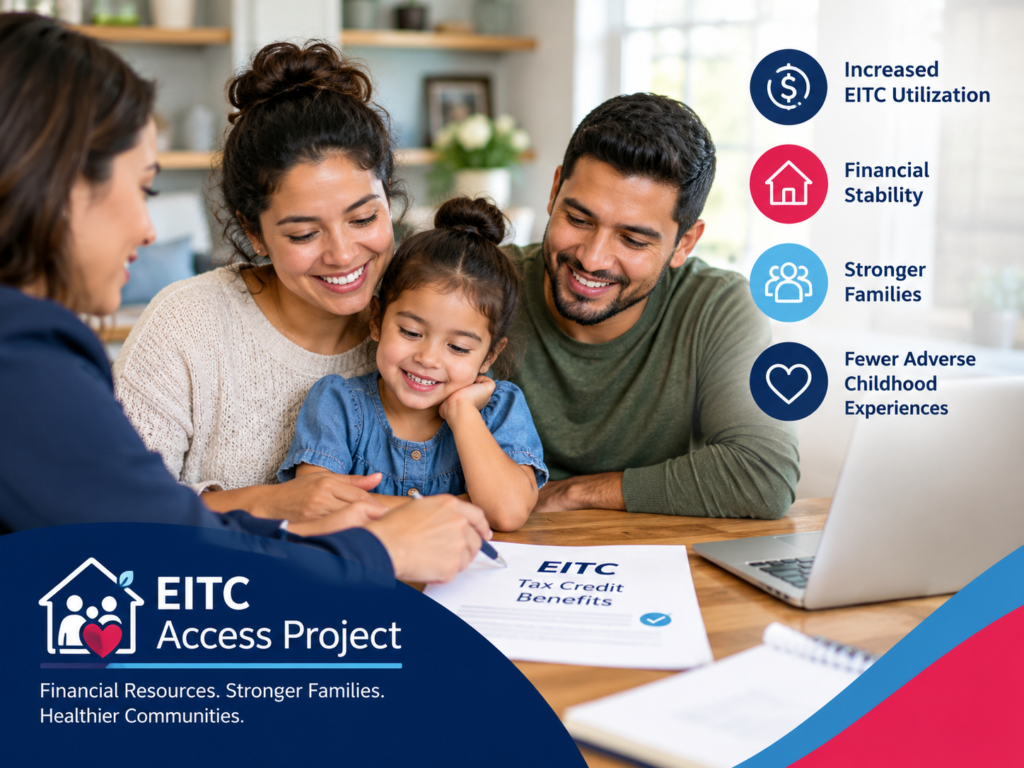
EITC stands for Earned Income Tax Credit.
It is a U.S. federal tax credit designed to help people and families with low to moderate incomes who earn income through work. Depending on their income, filing status, and number of qualifying children, eligible taxpayers may receive a tax refund even if they owe little or no federal income tax.
In the context of your Child Maltreatment Prevention Lab research, the EITC is relevant because:
- Financial stability: It can increase the amount of money families have available for essentials like housing, food, and childcare.
- Child and family well-being: Additional financial resources may reduce economic stress and improve outcomes for children.
- Child maltreatment prevention: Researchers study whether expanding access to tax credits and other economic supports can reduce risk factors associated with child maltreatment.
The study, “A Novel Strategy for Increasing Utilization of Earned Income Tax Credits and Reducing Adverse Childhood Experiences: The EITC Access …”, examines strategies to help eligible families access these benefits.
One important distinction: the EITC is a tax credit, not a loan, so eligible recipients do not have to repay it.
More Info
- IRS: Earned Income Tax Credit (EITC) — eligibility, income limits, and how the credit works.
- IRS: EITC Assistant — a tool to help determine whether someone qualifies.