The Impact of State Workplace Protections on Socioeconomic Outcomes of IPV Survivors.

This study examines whether state-level workplace protections for intimate partner violence (IPV) survivors are associated with employment and housing stability among mothers who have experienced IPV. Findings suggest that reasonable accommodations, confidentiality protections, and safeguards against discharge for abuse-related work disruptions are associated with a greater likelihood of employment. However, these policies were not associated with reduced housing hardship, highlighting the need for additional policy approaches to support survivors’ long-term socioeconomic stability. […]

Read More… from The Impact of State Workplace Protections on Socioeconomic Outcomes of IPV Survivors.
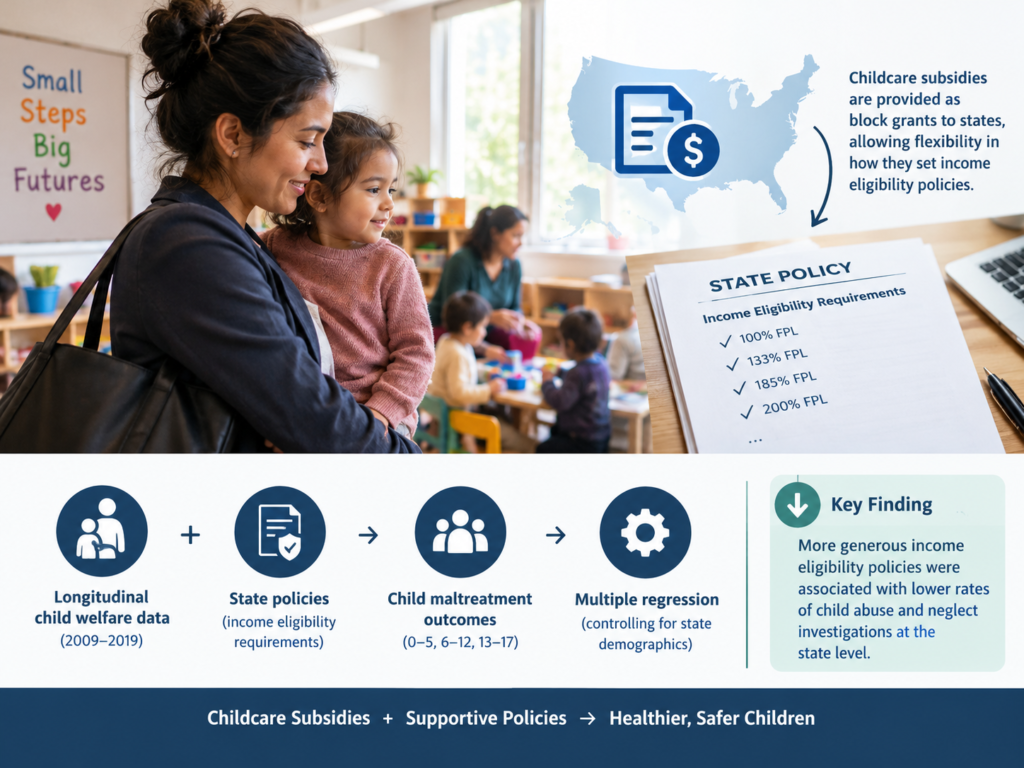
Childcare Subsidy Enrollment Income Generosity and Child Maltreatment

This study examined how state childcare subsidy income-eligibility policies relate to child maltreatment rates. Findings showed that more generous income eligibility policies were associated with lower rates of child abuse and neglect investigations, highlighting the potential for childcare assistance policies to support child and family well-being. […]

Read More… from Childcare Subsidy Enrollment Income Generosity and Child Maltreatment

Family-, School-, and Neighborhood-Level Predictors of Resilience for Adolescents with a History of Maltreatment

This study examines how family, school, and neighborhood environments support resilience among adolescents who experienced childhood maltreatment. Findings show that maternal involvement, school connectedness, and neighborhood social cohesion are important protective factors associated with positive functioning and social skills during adolescence. […]

Read More… from Family-, School-, and Neighborhood-Level Predictors of Resilience for Adolescents with a History of Maltreatment

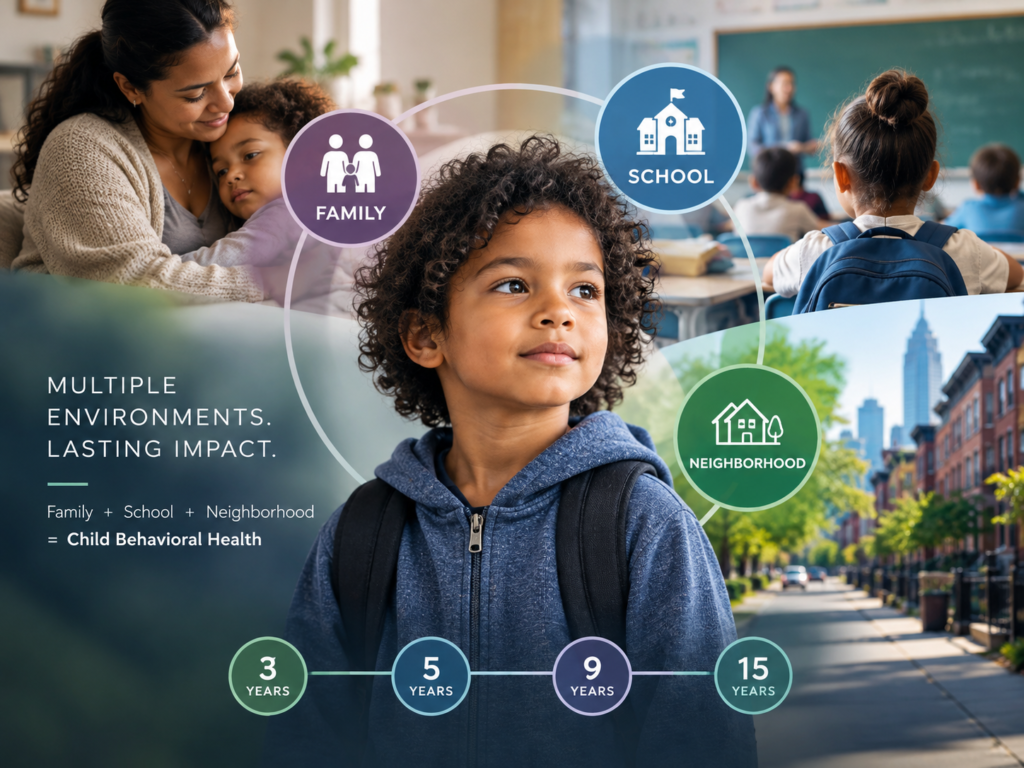
Contextual Factors of Child Behavioral Health Across Developmental Stages

This study examines how family, school, and neighborhood environments influence children’s behavioral health from early childhood through adolescence. Using longitudinal data, researchers found that factors such as child abuse, maternal depression, substance use, neighborhood conditions, school connectedness, and peer bullying were associated with behavioral problems at different developmental stages. The findings highlight the lasting impact of early childhood experiences and the importance of addressing multiple environmental factors to support children’s behavioral health and well-being. […]

Read More… from Contextual Factors of Child Behavioral Health Across Developmental Stages

Early Childhood Education and Care Policies in the U.S. and Their Impact on Family Violence

This study reviews research on how early childhood education and care policies, including childcare subsidies, Head Start, and universal pre-K, may help prevent child maltreatment and intimate partner violence (IPV). The review found promising evidence that childcare subsidies and Head Start can reduce family violence or related risk factors, such as poverty and employment instability. Although more research is needed, the findings suggest that expanding access to affordable, high-quality childcare and early education may support family well-being and help prevent violence. […]

Read More… from Early Childhood Education and Care Policies in the U.S. and Their Impact on Family Violence

The Mediating Role of Housing Insecurity in the Relationship Between Neighborhood Social Cohesion and Child Maltreatment Among Low-Income Urban Families

This study examines how neighborhood social cohesion and housing insecurity relate to child maltreatment among low-income urban families. Researchers found that stronger neighborhood social cohesion was associated with lower levels of physical and psychological child abuse, partly because it was linked to reduced housing insecurity. The findings highlight how supportive neighborhoods and stable housing can work together to help prevent child maltreatment and strengthen family well-being. […]

Read More… from The Mediating Role of Housing Insecurity in the Relationship Between Neighborhood Social Cohesion and Child Maltreatment Among Low-Income Urban Families

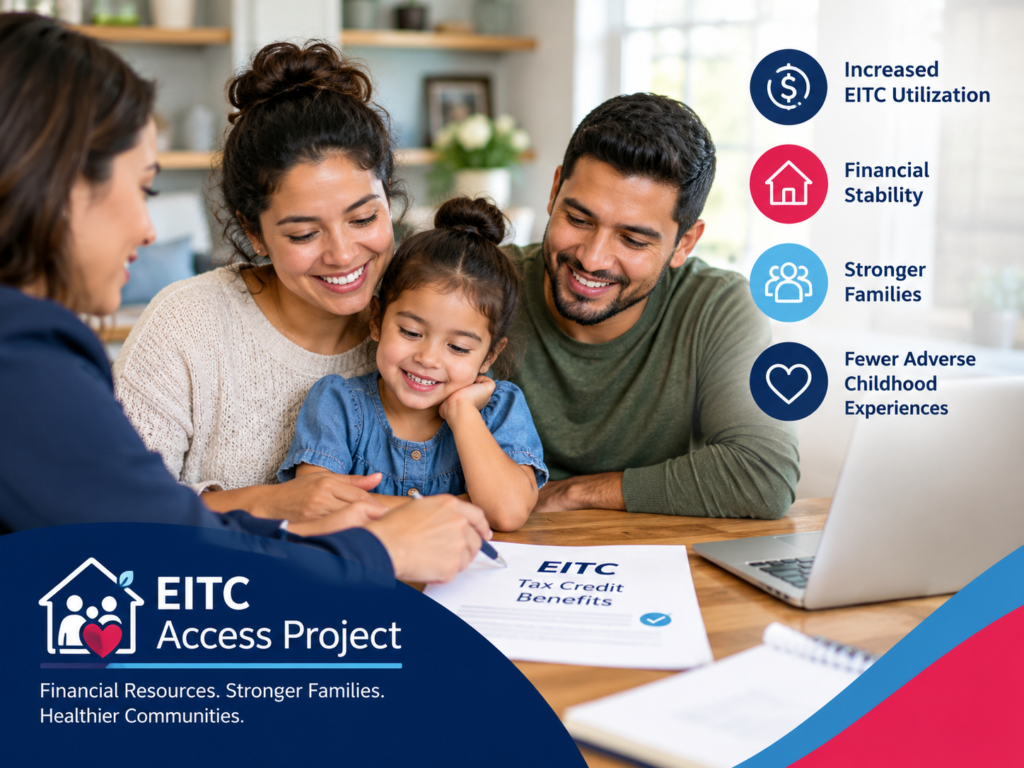
A Novel Strategy for Increasing Utilization of Earned Income Tax Credits and Reducing Adverse Childhood Experiences: The EITC Access Project

This article describes the EITC Access Project, a Michigan initiative designed to help eligible families access the Earned Income Tax Credit (EITC) and strengthen their financial stability. The project combines community education with individualized benefits advocacy through home-visiting programs, using financial education and empowerment strategies to increase tax credit utilization. By helping families access financial resources, the initiative aims to reduce economic stress and support child maltreatment prevention. […]

Read More… from A Novel Strategy for Increasing Utilization of Earned Income Tax Credits and Reducing Adverse Childhood Experiences: The EITC Access Project